MY WORK
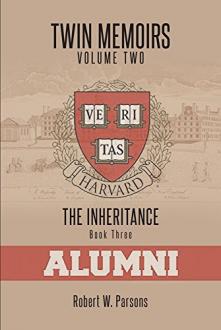
by Robert W. Parsons
FOREWORD
“Frankly, my dear…” October 29, 1939 Hollywood, California
David O. Selznick was the fiery independent film producer who had staked his career on the adaption of Margaret Mitchell’s novel, Gone With the Wind. Will Hays directed the Hays Office, which maintained the “morality” of motion pictures at that time.
Dear Mr. Hays,
As you probably know, the punch line of Gone With the Wind, the one bit of dialogue that forever establishes the future relation[1]ship between Scarlett and Rhett, is, “Frankly, my dear, I don’t give a damn.”
Naturally, I am most desirous of keeping this line, and to judge from the reactions of two previous audience, the line is remembered, loved, and looked forward to by the millions who have read this new American classic.
Under the code, Joe Breen is unable to give me permission to use this sentence because it contains the word damn, a word specifically forbidden by the code.
As you know from my previous work with such pictures as David Copperfield, Little Lord Fauntleroy, A Tale of Two Cities, etc., I have always attempted to live up to the spirit as well as the exact letter of the producer’s code. Therefore, my asking you to review the case, to look at the strip of film in which this forbidden word is contained, is not motivated by a whim. A great deal of force and drama of Gone with the Wind, a project to which we have given three years of hard work and hard thought, is dependent upon that word.
It is my contention that this word as used in the picture is not an oath, or a curse. The worst that could be said against it is that it is a vulgarism, and it is so described in the Oxford English Dictionary. Nor do I feel that in asking you to make an exception in this case, I am asking for the use of a word, which is considered reprehensible by the great majority of American people and institutions. A canvass of the popular magazines shows that even such moral publications as Woman’s Home Companion, Saturday Evening Post, Collier’s, and The Atlantic Monthly use this word freely. I understand the difference, as outlined in the code, between the written word and the word spoken from the screen, but at the same time, I think the attitude of these magazines toward damn gives the indication that the word itself is not considered abhorrent or shocking to audiences.
I do not feel that you are giving me permission to use damn in this one sentence will open up the floodgates and allow every gangster picture to be peppered with damns from end to end. I do believe, however, that if you were to permit our using this dramatic word in its rightfully dramatic place, in a line that is known and remembered by millions of readers, it would establish a helpful precedent—a precedent that would give to Joe Breen discretionary powers to allow the use of certain harmless oaths and ejaculations whenever, in his opinion, they are not prejudicial to public morals.
David O. Selznick
Note—the catch phrase lives on in motion pictures and television, such as,
• Star Trek’s “Beam me up, Scottie.” and Spock’s “Live long and prosper.”
• Terminator’s “Hasta la vista, baby.” and “I’ll be back!”
• Forrest Gump’s “Life is like a box of chocolates.”
• Jerry Maguire’s “Show me the money!”
• Mae West’s (for the older generation) “Come up and see me sometimes.”
Okay, okay, I’ll let it go. Now, try to keep that line and tune out of your head and avoid this brain worm for the next few hours.
Enjoy Volume 2 of another American classic in the making, Twin Memoirs…or not…for…
“Frankly, my dear(s), I don’t give a damn.”
NOTE: This author has given permission to use the word damn, and it will be used as a harmless, non-prejudicial vulgarism to get my point across to my readers despite public morals, whatever the opinion of ethics and standards. Chuckle